

How to Press Hash Rosin
Hash rosin pressing is where solventless work either shines or falls apart. You’ve already done the hard part — growing the right genetics and washing clean resin — and now temperature, pressure, time, and micron selection decide whether your bubble hash becomes luminous, terp-saturated rosin… or a dull, greasy disappointment.
This guide isn’t a “set your rosin press to X and pray” recipe. It’s a process-level explanation of how ice water hash behaves under pressure, what variables actually matter, and how to make clean decisions that respect the resin. If washing is separation physics, pressing is controlled flow.
Quick Navigation
- What is hash rosin?
- Start with the right bubble hash
- Choosing the right rosin bag micron
- Preparing hash for pressing
- Rosin press temperature for hash rosin
- Rosin press pressure (PSI) for hash rosin
- Press time
- Collecting rosin
- Curing hash rosin
- Common mistakes
- FAQ
What Is Hash Rosin?
Hash rosin is the solventless extract produced by pressing ice water hash (bubble hash) between heated plates. Heat liquefies the resin oils inside trichome heads, and pressure pushes that oil out while the filter bag retains most contaminants.
The quality of hash rosin is determined long before the press turns on:
- Genetics: trichome head size, neck brittleness, and resin chemistry.
- Wash quality: how cleanly resin separated in ice water.
- Drying: moisture control and terpene preservation.
- Press discipline: temperature, pressure, time, and restraint.
Important reality check: Pressing does not improve hash. It only reveals what’s already there.
Start with the Right Hash
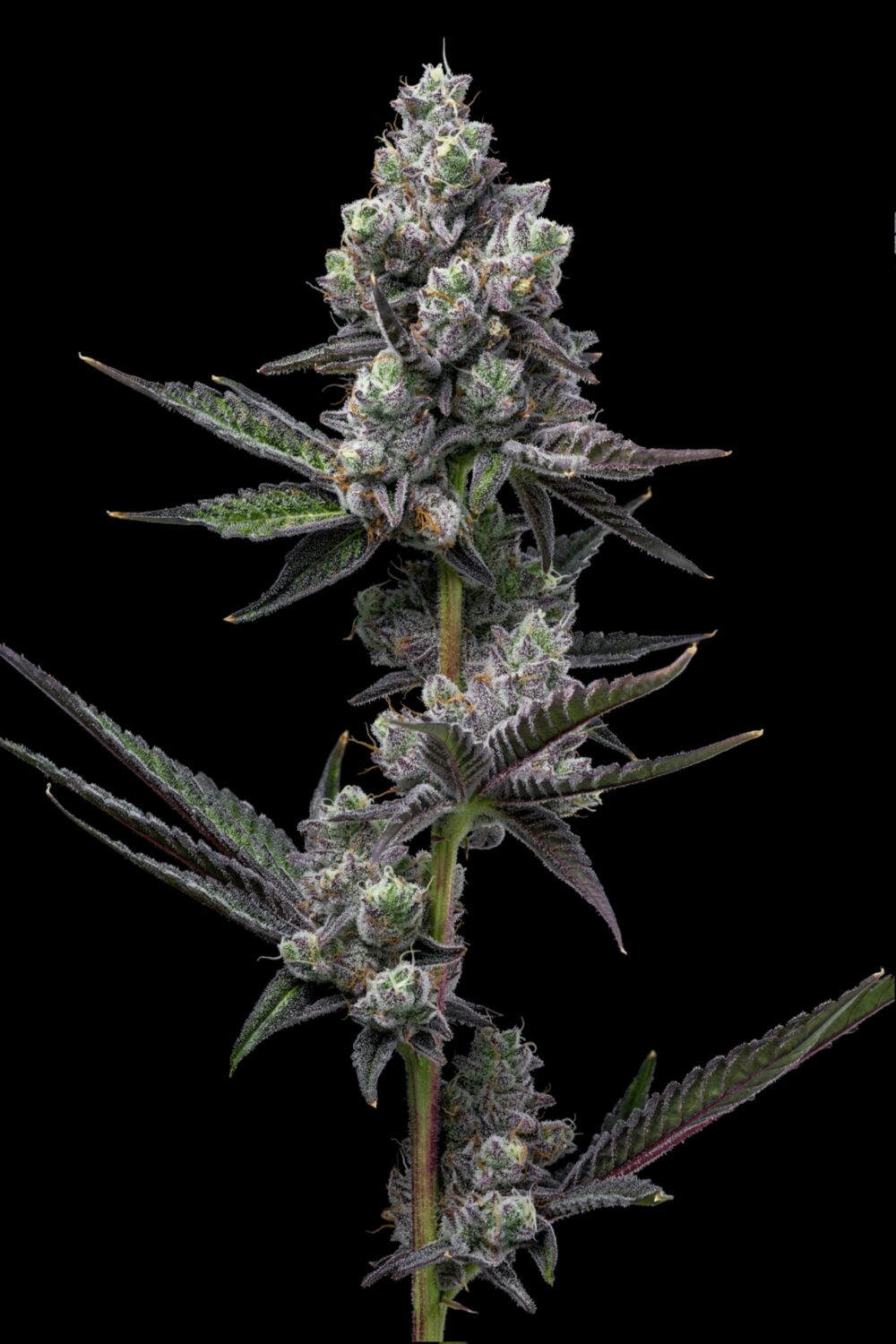
Heavy visual frost shows strong resin production, but washability depends on more than appearance.
Hash Micron Range Matters
Not all bubble hash is meant to be pressed. Your micron range decides purity, flavour, and how stable the rosin will cure.
- 25–70 µm: Edibles / temple balls only. These fractions often contain smaller, immature heads plus more stalk and contamination. Mixing them into a press usually dulls flavour and darkens colour.
- 90–120 µm: Often considered the crème de la crème and commonly used for competitions.
- 70–160 µm: “Full Spec” rosin — our preferred press range for the best balance of effects, flavour, and yield.
- 160 µm+: Usually edibles / temple balls, unless washing sun-grown material known for very large trichome heads. In that case, inspect the 160–179 µm fraction under a microscope and decide whether to include it.
Most elite hash rosin is pressed from clean 70–160 µm resin. That’s the sweet spot where yield, flavour, and texture align.
Dry Means Actually Dry
Pressing wet hash is one of the fastest ways to ruin a batch — both during the press and later during curing.
- Residual moisture causes sizzling, blowouts, and dull rosin.
- Water trapped in rosin accelerates degradation during storage.
- Worst case scenario: mould. If rosin goes mouldy, it is no longer safe to consume and must be discarded.
Freeze-dried hash is easiest to work with, but well-executed air drying works too. If it clumps, smears, or smells musty — stop.
Choosing the Right Rosin Bag
Rosin bags are not a formality — they’re the final filter between purity and contamination. The “best” micron depends on cultivar, melt grade, and how hard your resin wants to flow.
Common Rosin Bag Micron Sizes for Hash Rosin
- 5–25 µm: Cleanest rosin, lower yields, higher pressure sensitivity.
- 37 µm: The most common all-around hash rosin bag.
- 45 µm+: Higher yield, higher contamination risk.
Tip: Smaller micron doesn’t automatically mean “better” rosin. Resin chemistry — and ultimately genetics — determine whether oil flows or stalls.
Double & Triple Bagging
Double bagging (for example, 25 µm inside 160 µm) increases structural integrity and reduces blowouts without sacrificing flow. It’s especially useful with softer, oil-heavy cultivars.
At Wash Me Daddy, we often triple bag: two 25 µm bags inside a 120 µm or 160 µm outer bag. The outer bag acts as a support cage and helps prevent slippage.
Preparing the Hash for Pressing
Even Density Is Everything
Uneven hash creates uneven pressure — which leads to channeling, blowouts, and poor rosin flow.
- Fill bags to roughly 70–80% capacity.
- Aim for 10–15 mm thickness.
- No air pockets, no overpacking.
A light pre-press can help unify density, but it should never crush or warm the resin.
Rosin Press Temperature for Hash Rosin
Temperature controls viscosity. Pressure controls flow. Time controls degradation. The goal is to extract oil cleanly without cooking terpenes.
Cold vs Warm Pressing
- 55–70°C (130–160°F): Maximum terpene preservation, lower yield.
- 70–82°C (160–180°F): The balance zone — most premium hash rosin lives here.
- 82–93°C (180–200°F): Texture manipulation and/or yield chasing.
Above 93°C (~200°F), terpene loss accelerates rapidly. Above 105°C (220°F), you’re cooking resin, not extracting it.
Tip: If rosin looks dark and smells muted, temperature — not genetics — is often the culprit.
Rosin Press Pressure: PSI, Not Tons
Press gauges lie. What matters is platen PSI at the bag. Too much pressure forces contamination through the micron screen and can destabilise the final texture.
For hash rosin, most clean presses happen between:
- 350–750 PSI at the bag
Excessive pressure:
- Forces contaminants through the bag
- Increases blowout risk
- Creates greasy, unstable rosin
Slow Pressure Ramping
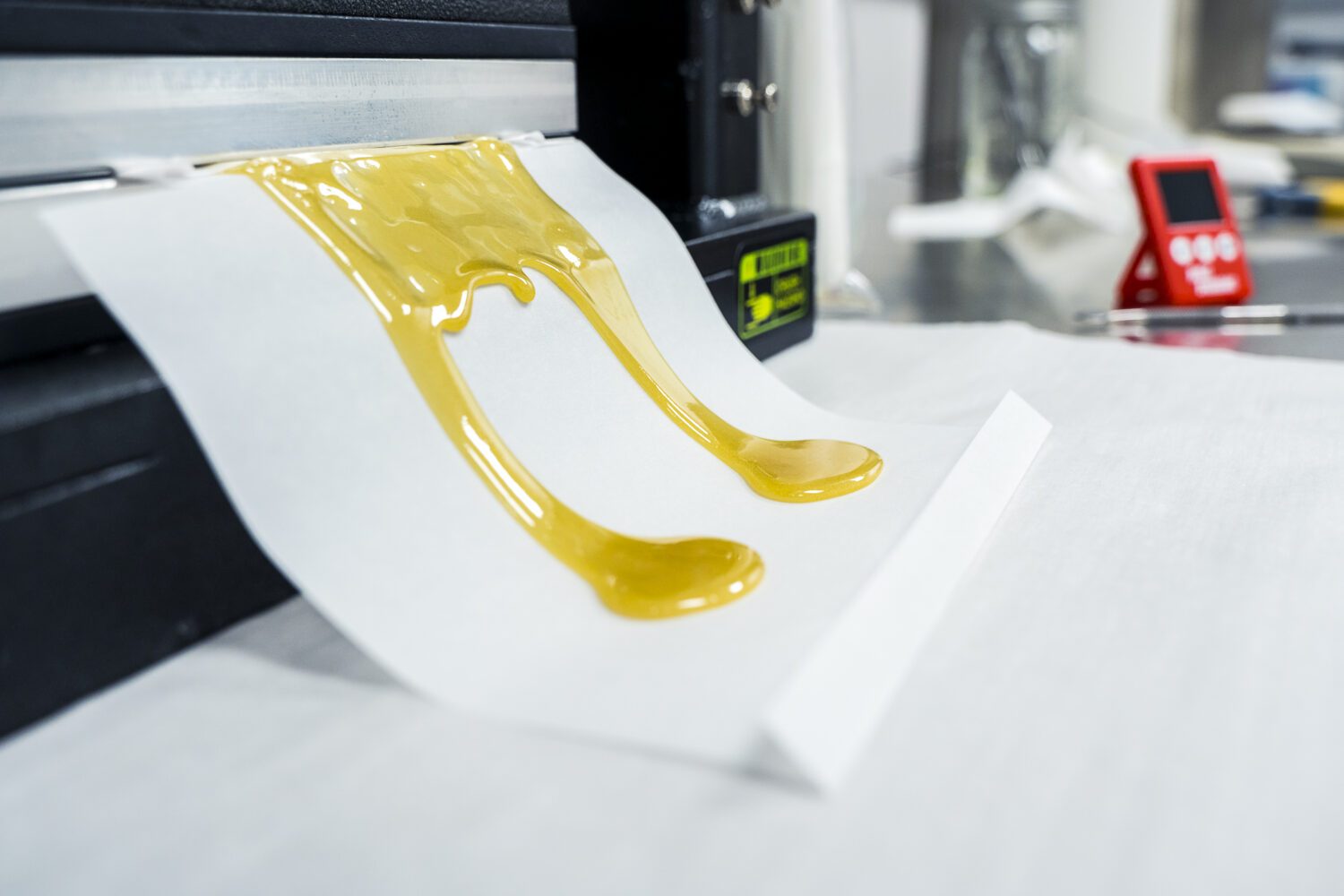
Solventless hash rosin showing ideal texture, colour, and terpene preservation.
Hash should warm and “sweat” before full pressure is applied.
- Start light.
- Let oil begin flowing.
- Increase pressure gradually.
Rosin should flow like honey — not erupt like a geyser.
Press Time
Most presses finish between 60–120 seconds. Once rosin stops flowing, continuing to press only degrades quality. Time does not create yield — oil availability does.
Collecting the Rosin
Collection is a continuation of extraction, not an afterthought. Handle rosin like it’s fragile — because it is.
- Allow rosin to cool slightly before handling.
- Use clean tools.
- Avoid smearing or overworking.
Cold plates help. Patience helps more.
Curing Hash Rosin
“Cold” Cure
“Cold” curing preserves terpenes and produces badder-like textures. Seal rosin in glass and allow nucleation to occur slowly. We cold cure at room temperature.
Warm Cure
Warm curing (32–50°C) enables jam, sauce, and separation textures. It trades some volatility for visual and textural diversity.
Tip: Curing doesn’t fix bad rosin — it refines good rosin.
Common Mistakes
- Pressing dirty hash: Contamination in, contamination out.
- Too much pressure: More damage than benefit.
- Too much heat: Flattened flavour, darker colour.
- Chasing yield: Quality always pays better.
Why Genetics Still Matter Most
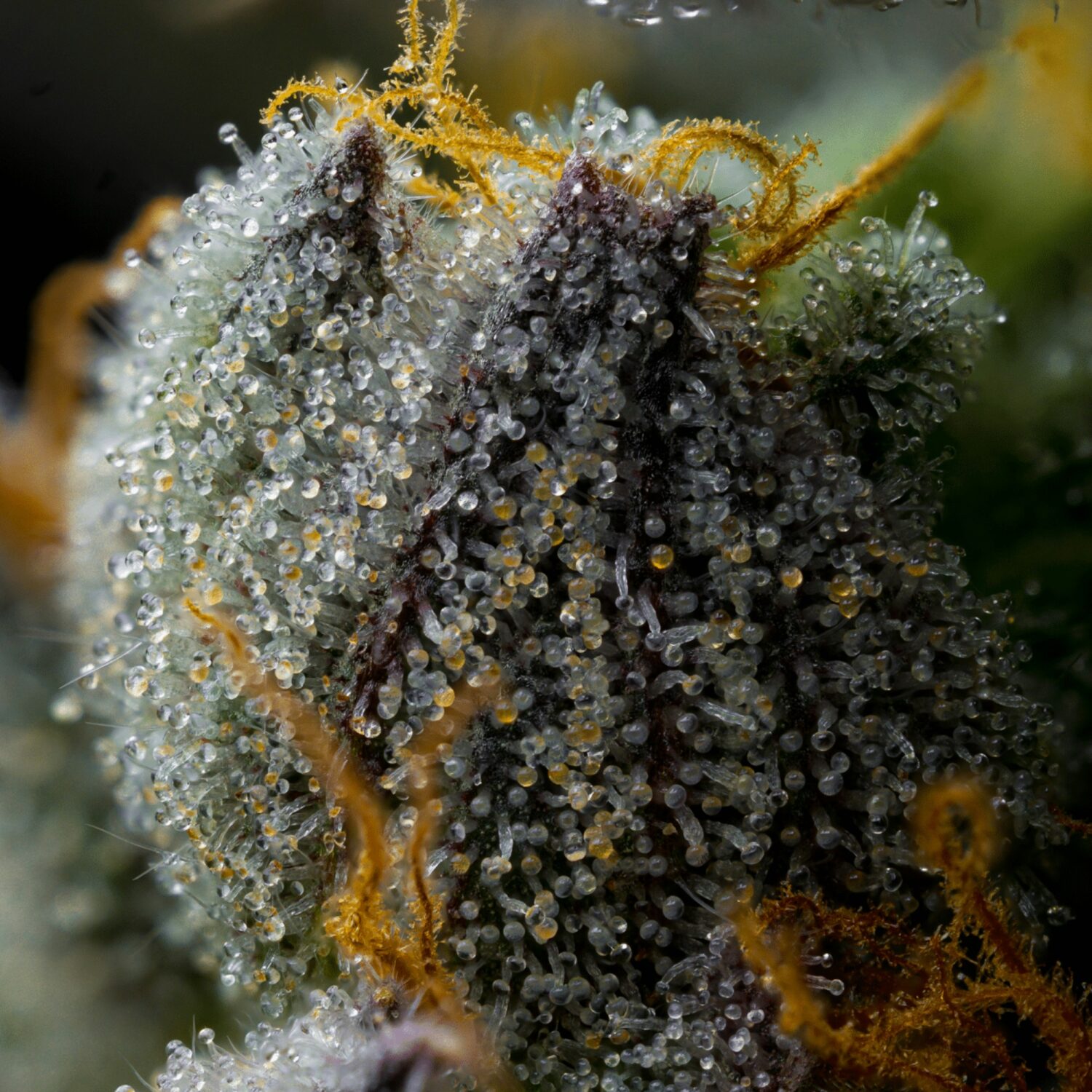
Amber-dominant trichomes signal very late flowering and harvest-ready resin. In this case we would say harvest should have been 1-2 weeks earlier - harvest timing is personal preference.
Elite pressing starts with elite washing — and elite washing starts with elite genetics. Large, brittle trichome heads release oil cleanly. Greasy resin smears. Overly sandy resin stalls. No press setting can fix that.
At 710 Wash Me Daddy, every line we release is evaluated not just for wash yield, but for press behaviour: oil flow, stability, terpene retention, and cured texture.
Pressing should feel predictable. If it doesn’t, look upstream.
FAQ
What micron hash presses best?
Typically 73–159 µm wash fractions press most cleanly, depending on cultivar.
What temperature should I press hash rosin at?
Most premium hash rosin is pressed between 70–82°C (160–180°F). Go cooler for maximum terpenes, warmer for more yield or texture shaping.
How much pressure should I use for hash rosin?
Focus on platen PSI at the bag. Many clean presses land around 350–750 PSI at the bag, with a slow pressure ramp.
Should I repress hash?
Yes — you can fold bags and press a second or even third time. Just don’t mix second presses with first-press rosin.
Why is my rosin hard?
Often genetics-driven — cultivars with higher THCa relative to terpenes tend to nucleate harder. Post-processing heat techniques can soften texture.
Next Reads
Master the full pipeline:
How to Wash Hash ·
Best Strains for Hash Rosin ·
Breeding for Resin
Ready to press genetics built for solventless? Explore the Bananaconda Line →